The three most common ways to extend Wi-Fi coverage – how each one works, their pros and cons, and which one fits your situation.
When a single router no longer covers your whole home or office, there are three common approaches to extending coverage: a mesh Wi-Fi system, a signal extender (repeater), or a separate wired access point. Each has its own operating logic, its own advantages, and its own trade-offs. The choice affects not just how simple the installation is, but also the real-world speed and stability in rooms further from the main router.
A mesh system consists of several interconnected nodes that together form a single Wi-Fi network with one network name. Devices automatically connect to the nearest, strongest node, and in most cases the handoff between nodes (roaming) happens with no noticeable interruption. Mesh nodes can communicate with each other either wirelessly ("wireless backhaul") or, where possible, over an Ethernet cable ("wired backhaul") – the latter provides a more stable connection between nodes. The main advantage of a mesh system is simple, user-friendly installation with no extra cabling required. The downside – if you rely solely on a wireless backhaul, each additional "hop" between nodes reduces the available bandwidth, so performance can suffer for nodes placed very far apart or with many hops in sequence.
An extender picks up the signal from your existing router and re-transmits it further, extending the coverage area. It's the simplest and cheapest solution – usually just plugged into an outlet with no additional configuration. Technically, though, it operates on the same frequency band used to communicate with the main router, so the available bandwidth behind the extender is often cut roughly in half, and extra latency is added. On top of that, many extenders create a separate network name, meaning devices won't automatically switch networks as you move through the house. An extender is an acceptable solution for light, occasional use in a single distant room, but it's not ideal for video calls or intensive simultaneous use by multiple devices.
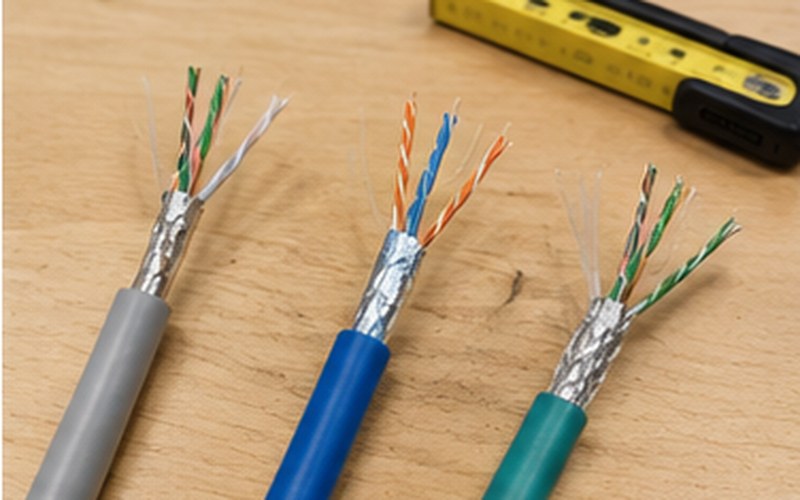
A wired access point is a separate Wi-Fi transmitting device connected directly to the network via an Ethernet cable (usually to a switch or router). Because the connection to the rest of the network runs over a cable rather than through the air, the access point doesn't lose bandwidth to a backhaul connection the way extenders do, and to some extent wireless mesh systems do too. This delivers the most stable and fastest solution, particularly in spaces with heavy load or many simultaneous users. The downside – you need to run a network cable to each access point's location, which means extra work and cost, especially in already-finished spaces.
| Solution | Installation simplicity | Performance in distant rooms | Cost category |
|---|---|---|---|
| Mesh system | Simple, no cabling required | Good, depends on the number of nodes and backhaul type | Medium |
| Extender | Very simple | Limited – bandwidth often drops | Lowest |
| Wired access point | Requires cable installation | Best – full bandwidth | Higher (including cabling) |
Actual performance also depends on the specific equipment models, room layout and interference environment.
If you have a medium-sized, multi-storey home and want a simple, user-friendly solution without running cables, a mesh system is usually the most balanced option. If the problem is small and occasional (for example, a weak signal in one distant room that's rarely used), an extender can be a sufficient, budget-friendly solution. If you're dealing with an office, a space with heavy load (many simultaneous users or devices), or a situation where maximum stability and speed matter, a wired access point is the technically superior solution, and the investment in cabling pays off through long-term performance and reliability.
Another practical aspect worth considering is how smoothly devices switch between transmitters as you move around the house. Quality mesh systems and professionally configured wired access points usually use a single network name (SSID) across all nodes, letting devices automatically connect to the nearest, strongest transmitter without any manual switching. Simpler extenders sometimes create a separate network name, meaning the user has to choose which network to connect to, and the device won't automatically switch to the stronger signal as you move from room to room. If a smooth, "invisible" experience throughout the house matters to you, this is one factor worth checking before buying specific equipment.
In practice, solutions are often combined rather than used in isolation. A common setup is a mesh system in which some nodes are connected via Ethernet cable (wired backhaul) while others connect wirelessly, depending on where cabling infrastructure is available. Another option is to use a wired access point in the main, high-load spaces (an office, a living room) while relying on an extender or a cable-free mesh node in less-visited or hard-to-reach areas (a garage, a basement). This kind of combined approach lets you balance performance, cost and installation complexity according to each space's actual importance.
When choosing a solution, it's worth thinking not just about your current situation but also about the future. If you plan to expand your home, add more smart devices, or increase the number of simultaneous users down the line, a wired access point or a mesh system with wired backhaul capability is easier to expand than later rebuilding a network built around extenders. It's also worth evaluating how easily cabling can be routed – if the house is already being renovated or newly built, running cable to planned access point locations is a relatively inexpensive addition, whereas in an already lived-in house without existing cabling infrastructure, it can be a more significant extra job.
All three solutions have their place depending on room size, load and budget. A mesh system is a good compromise for most homes, an extender suits simple, low-load cases, while a wired access point is the choice when maximum performance and stability matter and you're prepared to invest in cabling. Often the best result comes from combining these approaches according to each space's actual needs.
We assess your room layout and load to recommend the most suitable Wi-Fi solution – mesh, extenders or wired access points.
This material is part of our Wi-Fi network installation service.
Wi-Fi Network Installation →Fill in the form – we'll get in touch to discuss your needs.
Request a free consultation – we'll get in touch to discuss your needs.
We'll contact you within 5 minutes of submitting the form