Control who can enter your premises and when – access control solutions for offices, commercial sites and homes.
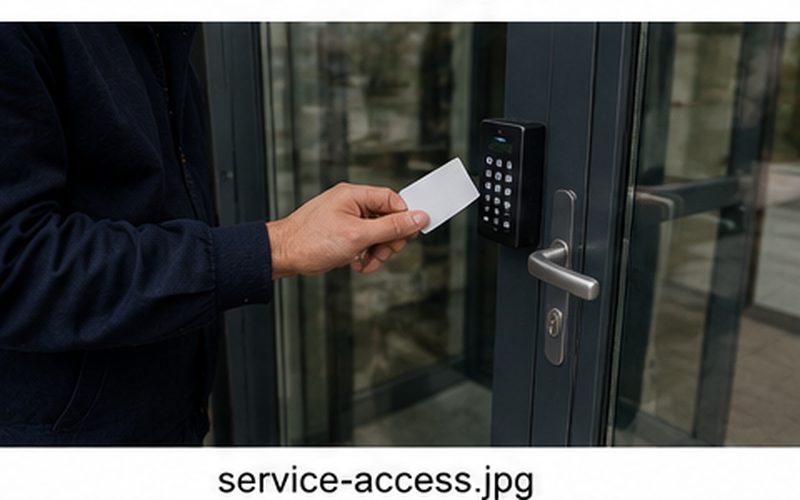
An access control system lets you manage who can enter specific rooms and at what time, replacing traditional keys with cards, codes or biometric solutions. This service is especially relevant for offices, where access needs to be separated between different departments or areas, though we also offer simplified solutions for private homes. We design the system to match the number of rooms and security requirements, install door readers and controllers, and integrate the system with video surveillance where needed.
Choosing an access control system is largely a trade-off between security level, ease of use and budget – higher-security solutions generally require a bigger investment and more complex management. During the consultation we help find the right balance for your situation, rather than offering one standard solution for every case. We design the system to be easy to manage after installation as well – adding new users or revoking access for those who no longer need it.
A security solution tailored to your situation
Written proposal before work begins
Simple user management after installation
Contactless cards or fobs for convenient, quick access to rooms.
Numeric code solutions where no physical access item is needed.
Fingerprint or other biometric solutions for higher security requirements.
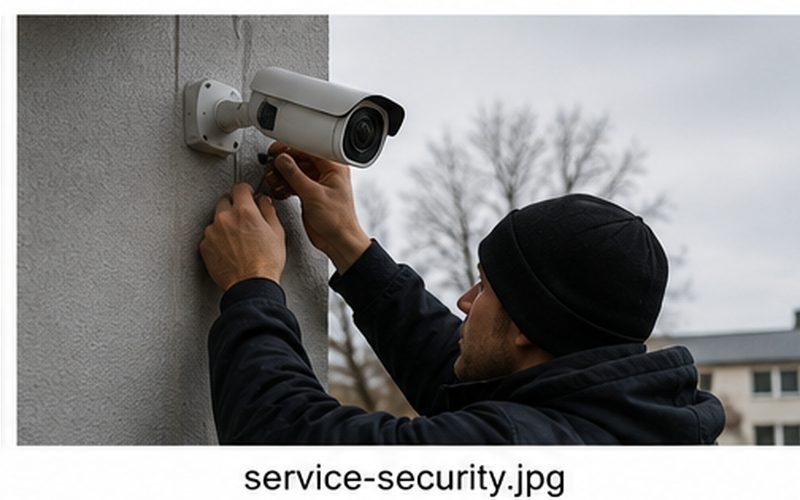
We link access events with camera footage for added traceability.
Access control solutions are highly scalable. The simplest case is a single entrance door code panel or card reader for a private home or small office – this already significantly reduces the risk that a lost key means having to change the lock. At the more complex end is a multi-floor office system with different access rights for different departments, time schedules (for example, access only during working hours) and a full event log showing who used a particular door and when. Between these two extremes there are many intermediate steps – for example, a shared-ownership building with a single entrance, or a small office with a few separated rooms.
When designing the system, we consider not only current needs but also how easily it can be expanded in the future – adding new doors, users, or integrating with other systems. This means choosing the right controller and software architecture already at the design stage, to avoid a situation where a minor expansion requires replacing the entire system.
A typical system consists of several elements: a card or code reader at the door, a controller that processes access requests, an electronic lock or door-opening mechanism, and sometimes an exit button for convenient exit from a room without a card. In more complex systems, these elements are connected to central management software that allows remote management of user rights and viewing of access history. If you'd like to understand in more detail how each component works, see our access control components explained guide.
Contactless cards and key fobs are the simplest and cheapest solution, but they can be lost or not returned when someone leaves a job. Code panels avoid this problem, but a code can become known to unauthorized people if it's not changed regularly. Biometric solutions (fingerprint or facial recognition readers) provide the highest level of security, since access can't be passed on, but they are more expensive and require more careful installation. In practice, many systems combine several methods – for example, cards for everyday use and biometrics for higher-risk rooms, such as a server room or cash office.
We discuss the room layout and desired security level.
We choose the most suitable access method and equipment layout, and prepare a written proposal.
We install door readers, controllers and management software.
We offer ongoing system maintenance and user management support.
Not sure how access control components work? See our access control components explained guide.
Fill in the form – we'll get in touch to discuss your needs.
Request a free consultation – we'll get in touch to discuss your needs.
We'll contact you within 5 minutes of submitting the form