A decision matrix to help you understand when to use fiber optics, when to use copper cable, and when to combine both in a single network infrastructure.
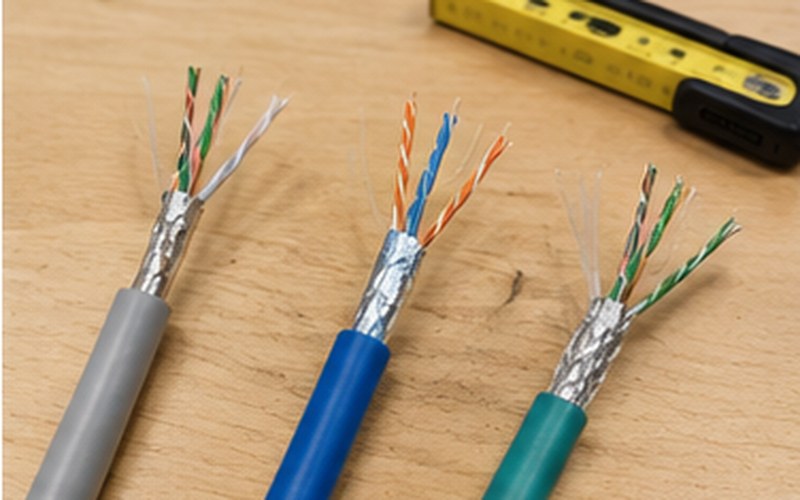
Copper cable (for example, Cat5e, Cat6, Cat6A) transmits data as an electrical signal through metal conductors. Fiber optic transmits data as light pulses through a glass or plastic fiber. This fundamental difference also determines everything else – distance, bandwidth, sensitivity to interference, and installation requirements. The electrical signal in copper cable gradually weakens and is subject to electromagnetic interference from nearby power cables, motors or other devices. The light signal in fiber optic is not subject to this kind of interference, and it can travel considerably longer distances without significant loss of signal quality.
Standard copper cable (Cat5e/Cat6/Cat6A) maintains full speed up to roughly 100 meters – a fixed limit that stems from the properties of electrical signal attenuation. Fiber optic essentially doesn't have that limitation on the same scale: depending on the fiber type (multimode or single-mode) and the transceiver used, it can transmit data reliably over hundreds of meters up to several tens of kilometers, while maintaining high bandwidth. This makes fiber optic the only practical solution in situations where the distance between points exceeds copper cable's 100-meter limit – for example, connecting two buildings or a remote site to the main network hub.
Because fiber optic transmits light rather than electricity, it is completely immune to electromagnetic interference. This matters in industrial environments, in facilities with heavy electrical equipment, or wherever the cable route runs alongside high-power electrical lines. Copper cable may require additional shielding or careful route planning in such conditions to avoid degraded signal quality.
| Criterion | Copper cable | Fiber optic |
|---|---|---|
| Signal type | Electrical | Light pulses |
| Max. distance at full speed | ~100 m | From several hundred meters up to several km (depending on type) |
| Sensitivity to EMI | Susceptible if not properly shielded | Immune |
| Typical use | Workstations, devices, indoor connections | Backbone, building interconnects, long runs |
| Installation complexity | Relatively simple, with standard tools | Requires specialized termination/splicing |
| Cost category | Lower–medium | Medium–higher (mainly installation labor) |
Values are indicative; actual figures depend on the specific cable type, quality and installation conditions.
Copper cable installation is relatively straightforward – it can be done with standard tools, and installing connectors doesn't require specialized equipment. Fiber optic termination (installing connectors) or splicing (joining fibers), on the other hand, requires specialized equipment and experience – improperly performed termination can significantly degrade signal quality. So while the fiber itself as a material is often not more expensive than quality copper cable, the total project cost for fiber optic is usually higher due to the greater complexity of the installation work.
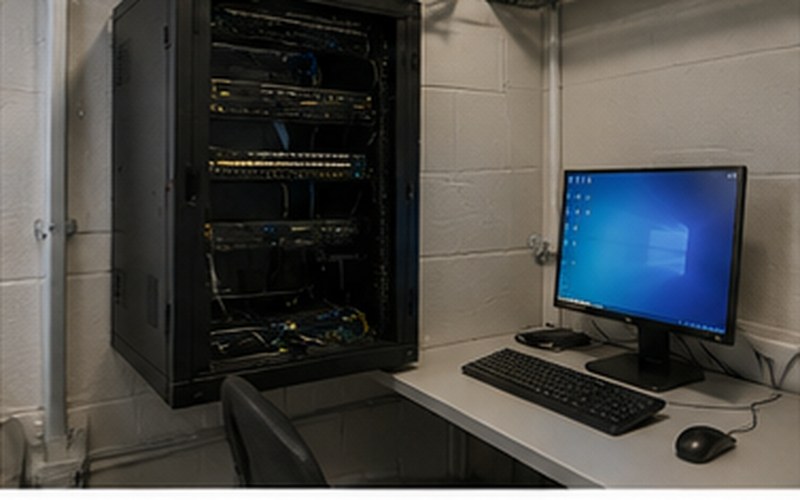
For most real-world projects, the best answer isn't "either/or" – it's a hybrid approach. Fiber optic serves as the backbone connection for longer runs, for example between a building's main network cabinet and floor distribution cabinets, between buildings on a site, or connecting a remote site to the main infrastructure. From the network cabinet to the end device – a computer, an access point, a camera or a printer – copper cable is typically used, since the distance is shorter than 100 meters and connecting to end devices with copper connectors is more practical and cheaper. This combination lets you take advantage of each technology where it matters most, without taking on unnecessary cost where it isn't needed.
In practical decision-making, it's worth starting with two questions: what is the distance between the points that need to be connected, and are there significant sources of electromagnetic interference between those points? If the distance exceeds 90–100 meters, or the route needs to cross an area with heavy electrical equipment, fiber optic is usually the right choice. If it's a matter of connecting to an end device at a relatively short distance, copper cable remains the more practical and economical solution. In more complex projects – multi-building sites, high-load server rooms, or when planning for future expansion – combining both technologies lets you build a network that is both high-performing and cost-effective.
We assess your site, distances and load to recommend the most suitable solution – copper cable, fiber optic, or a combination of both.
This material is part of our fiber optic installation service.
Fiber Optic Installation →Fill in the form – we'll get in touch to discuss your needs.
Request a free consultation – we'll get in touch to discuss your needs.
We'll contact you within 5 minutes of submitting the form